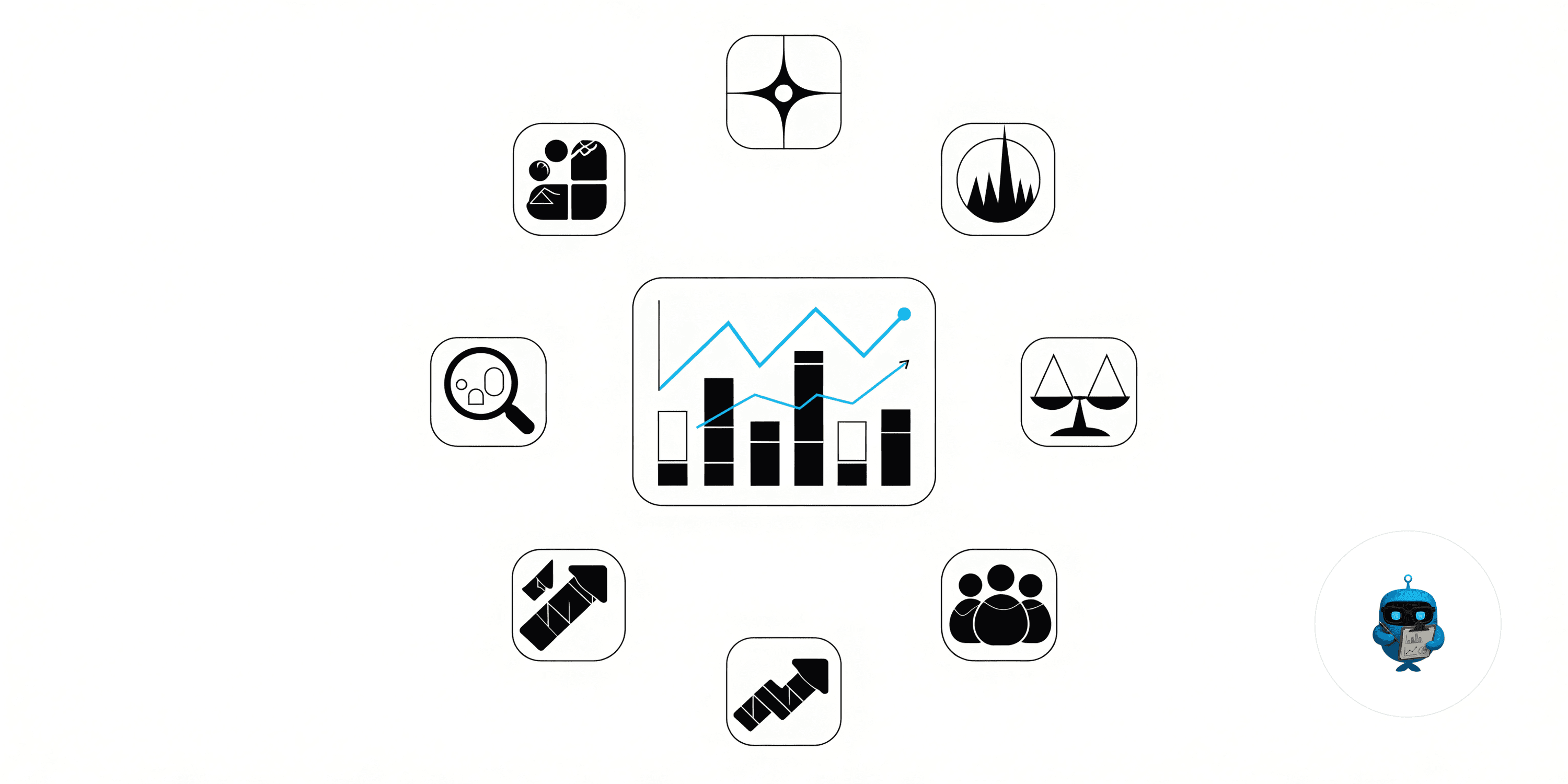

- You can run SEO on free tools alone. What you give up without paying is scale and cross-competitor breadth, not the underlying function.
- The stack: Google Search Console, Ahrefs Webmaster Tools, Semrush's free plan, Otterly.AI, and LLMrefs. GSC is non-negotiable because it's Google's own first-party data.
- Start with GSC. Run your own page through a free grader to find the exact gap before picking any dedicated tool.
The best free AI tools for SEO cover more ground than most people assume: first-party performance data, backlink and site-audit data, keyword research, and now AI-search citation tracking. None of it requires a card on file to start.
| Tool | What it covers | Free tier limit |
|---|---|---|
| Google Search Console | Clicks, impressions, position, indexing, Core Web Vitals, AI Overview impressions | None, fully free |
| Ahrefs Webmaster Tools | Site audit, backlink data, ranking keywords, scoped to your own verified domain | Own domain only, not competitors |
| Semrush free plan | Keyword Magic Tool + Domain Overview, 27B+ keyword database | 10 queries/day |
| Otterly.AI free GEO utilities | Query fan-out generator, AI crawler simulator, free AI Overviews tracking tier | Small brand/query cap |
| LLMrefs free tier | Brand-mention tracking across ChatGPT, Perplexity, Gemini | Small monitored-brand cap |
Why Free Tools Genuinely Cover This Now
The honest version of this claim isn't "free tools match paid suites feature for feature." It's narrower and still true: a stack of free tools covers most of the core capability a paid suite offers, and what you actually give up without paying is scale (daily query caps, monitored-brand limits) and cross-competitor breadth, not the underlying function.
Google Search Console alone makes this true for the most important category: it's not a free alternative to a paid tool, it's the actual first-party source every paid tool eventually references, and it costs nothing. It sits alongside the broader set of best free AI tools for digital marketing that cover the rest of the funnel.
The 5 Free Tools, in Order of Where to Start

1. Google Search Console
The one non-negotiable tool on this list. It's Google's own data: clicks, impressions, average position, indexing status, Core Web Vitals, and AI Overview impressions specifically. Nothing else gives you this directly from the source.
Good fit if: you have a live site and haven't verified it here yet, in which case this is step one before anything else on this list.
2. Ahrefs Webmaster Tools
The free version is scoped to your own verified domain: a real site audit, backlink data, and ranking keywords, with no card required.
Good fit if: you need a technical site audit and backlink visibility but don't need to benchmark against named competitors, which is where the paid tier's cross-domain features come in.
3. Semrush Free Plan
10 queries a day, using the Keyword Magic Tool and Domain Overview against a 27B+ keyword database. Real friction for daily use, genuinely useful for occasional research.
Good fit if: you're researching keywords for a specific new page or campaign rather than running continuous keyword tracking, where the daily cap won't bind.
4. Otterly.AI's Free GEO Utilities
A query fan-out generator (shows the range of related questions an AI engine might expand your query into) and an AI crawler simulator, plus a free tier of their AI Overviews tracker.
Good fit if: you've never checked whether AI assistants cite your content and want a first look before committing to a paid AI-visibility tool.
5. LLMrefs Free Tier
Brand-mention tracking across ChatGPT, Perplexity, and Gemini, capped at a small number of monitored brands, no card required.
Good fit if: you want a second free data point alongside Otterly.AI before paying for either. For the paid tier and the wider AI-citation-tracking category, see the best tools for tracking brand visibility in AI search.

Before comparing any of the 5 tools above, run your own page through the Website & AEO Grader first. Switch it to AEO mode - it scores a URL on both traditional SEO (meta tags, headings, schema) and AEO (structured data, direct-answer formatting, citation-friendly structure) in one pass, so you know exactly which gap you're solving for before picking a dedicated tool for it.
What to Check Before You Add a 6th Tool
- Have you verified Google Search Console? If not, nothing else on this list matters yet.
- Do you know your current SEO and AEO gaps specifically, or are you guessing? Run a free grader first, then pick tools that address the actual gap it flags.
- Are you optimizing for traditional rankings, AI citations, or both? Different tools on this list target different halves of that question - how to optimize content for AEO covers the citation half in more depth.
- Is the free tier's limit (10 queries/day, small brand cap) actually binding for your use case, or are you paying for headroom you won't use?
How to Combine These Five Tools Into a Weekly Workflow
Used separately, these five tools compete for the same hour. Used in a fixed order, each one feeds the next.
- Monday: scan Google Search Console for impressions without clicks. These are titles or meta descriptions that show up in results but don't get chosen, usually the fastest rewrite to make in a given week.
- Same day: grade the page before you edit it. Running it through a free grader first means you fix structure and copy in one pass instead of two, since the grader often shows exactly why the description isn't earning the click.
- Midweek: spend Semrush's daily queries on that one gap. Ten queries a day isn't enough for broad research, but it's enough to check the specific keyword or competitor page the grader or GSC already flagged.
- Weekly: check Ahrefs Webmaster Tools for new backlinks or a site-health flag. A weekly glance catches a broken redirect or a toxic link before it compounds into a ranking problem.
- Monthly: check Otterly.AI and LLMrefs for AI citations. Which sources an AI answer engine cites can shift from one month to the next even when your search ranking hasn't moved, so this needs a separate, slower check.
Common Mistakes When Stacking Free SEO Tools
Free tools remove the cost barrier, not the risk of using them badly. The same few mistakes show up across teams doing this.
- Burning daily query limits on broad research. Ten Semrush queries spent on a vague head term teach you less than two queries spent on the exact gap a grader or GSC already flagged.
- Reading average position as one number. Google Search Console blends devices, countries, and query variants into a single average. A page can look mid-pack overall while ranking well on desktop and poorly on mobile, and the aggregate hides which one needs the fix.
- Checking AI-citation tools once and assuming it's settled. Which pages an AI engine cites changes more often than traditional rankings do, so a single check from a few months ago tells you less than it feels like it does.
- Never verifying Google Search Console at all. Teams skip it as "just an SEO thing" and only discover months later that indexing errors or Core Web Vitals failures were never being caught, because nothing else on this list surfaces them.
Final Thoughts
Start with Google Search Console if you haven't, it's not optional. Then run your own page through a free grader to see your actual SEO and AEO gaps before picking from the rest of this list, that order gets the most out of the best free AI tools for SEO without paying for a tool that solves a problem you don't actually have.
Frequently asked questions.Answered.
- The best free AI tools for SEO cover most of what a paid suite does: first-party performance data (Google Search Console), backlink and site-audit data scoped to your own domain (Ahrefs Webmaster Tools), keyword research (Semrush's free plan), and now AI-search visibility (Otterly.AI, LLMrefs). What you lose without paying is scale (query caps, monitored-brand limits) and cross-competitor depth, not the core capability.